
What Should I Expect From OCD Therapy
If you're considering OCD therapy and live in Burlington or anywhere in Ontario, you may be wondering what to expect from therapy. As a Registered Psychotherapist, I've helped many people with OCD move from feeling trapped by intrusive thoughts and compulsions to feeling more confident and in control. Here's what OCD therapy typically looks like and what you can expect along the way.
Key Takaways: OCD therapy begins by helping you understand how OCD works, why you feel stuck, and how your unique obsessions and compulsions are keeping the cycle going. Together, we'll build skills to regulate your nervous system before using evidence-based approaches such as Exposure and Response Prevention (ERP) or Inference-Based Cognitive Behavioural Therapy (I-CBT). Therapy moves at a pace that feels challenging but manageable, with the goal of helping you break free from OCD's grip, regain confidence in yourself, and spend less time controlled by intrusive thoughts and compulsions.

Living with Obsessive-Compulsive Disorder (OCD) can feel exhausting. You might spend hours each day caught in unwanted thoughts, mental rituals, reassurance seeking, checking, washing, or avoiding situations that trigger fear. Even if you logically know the fears are likely not true, the feeling can be overwhelming and hard to fight.
If you're considering OCD therapy, you might also be wondering:
Will therapy make my anxiety worse?
Will I be forced to face my biggest fears?
What actually happens in therapy?
Does OCD therapy really work?
These are questions I hear often, and they're completely understandable.
I specialize in supporting individuals who are experiencing OCD, I want you to know that therapy is not about forcing you into terrifying situations or convincing you to "just stop thinking about it." Instead, OCD therapy helps you understand why OCD has such a powerful grip on your mind and teaches you evidence-based strategies to loosen that grip over time.
First, It's Important to Know That Your Brain Isn't Broken
One of the first things I tell clients is that their brain isn't broken. OCD hijacks the brain and it convinces you to doubt what you see, hear, remember, or know. It creates believable "what if" stories that feel possible, even when there is little or no evidence to support them.
Because these possibilities feel threatening, your brain urges you to do something to reduce the discomfort. That "something" is called a compulsion.
Compulsions can include:
Washing
Checking
Reassurance seeking
Avoiding certain places or situations
Counting
Repeating words or phrases mentally, or asking others to repeat words or phrases
Replaying conversations
Replacing "bad" thoughts with "good" thoughts
Mentally reviewing memories
doing things until they feels “just right,” sometimes also considered perfectionism OCD
Completing the compulsion usually brings temporary relief from the discomfort. Unfortunately, that relief teaches your brain that the obsession must have been important and that the compulsion "worked." The cycle repeats, becoming stronger over time.
Many people also don't realize how many different forms OCD can take. I've had clients discover, after years of believing they simply had anxiety, that they were actually living with OCD. Finally understanding what was happening often explains why previous treatment hadn't addressed the root of the problem.
If you're still trying to understand whether what you're experiencing could be OCD, you may want to start by reading about
The First Few Sessions Focus on Understanding Your Unique OCD
Many people assume they'll walk into the first therapy session and immediately start doing exposures, but that isn't how I work. The first few sessions are about understanding your unique experience with OCD and as well I explain how OCD affects your thoughts, emotions, body sensations, and behaviours, and how these processes unintentionally keep OCD alive. .
Together we'll explore:
Your obsessions
Your compulsions
How OCD affects your daily life
Your emotional responses
Physical sensations you notice in your body
Situations that make OCD louder or quieter
Understanding why OCD feels so convincing
What goals you'd like to work toward
No two people experience OCD exactly the same way, even when they share the same OCD theme. Understanding your particular OCD helps us develop a treatment plan that's tailored specifically to you.
Before We Challenge OCD, We Build Your Capacity to Handle It
One thing that surprises many clients is that therapy doesn't begin by jumping into difficult OCD work.
No matter which evidence-based treatment approach you choose, I first focus on helping you build your ability to regulate your nervous system. We begin by learning how to recognize the signs that your nervous system is becoming activated. Then we practice techniques that help you return to a calmer, more regulated state.
These skills are practiced during sessions and between appointments so they become familiar before we begin more challenging OCD work.
Building this foundation helps clients feel more confident and more capable of responding differently when OCD shows up.
Choosing the Right OCD Therapy
There are several types of therapies used in the treatment of OCD and I will not be describing all of them as I am trained in and know the most about the following evidence-based treatments: Exposure and Response Prevention (ERP) and Inference-Based Cognitive Behavioural Therapy (I-CBT). Rather than deciding for you, I walk you through both approaches, and answer any questions you have. Because research shows that ERP and I-CBT lead to similar improvements for many people with OCD, you can choose the approach that resonates most with you
What Happens During ERP?
Exposure and Response Prevention (ERP) is considered one of the gold-standard treatments for OCD. Many people hear the word "exposure" and immediately feel frightened. The reality is much gentler than people imagine.
First, we map out your OCD cycle and identify the situations that trigger your compulsions. Next, we create a hierarchy; from situations that cause the least distress to those that feel the most challenging. Together, we start with the easier items.
An exposure might be as small as:
Imagining touching a contaminated doorknob.
Standing beside a doorknob without touching it.
Touching something briefly and delaying handwashing for a short time (i.e.10 seconds or whatever you think you can handle).
Each step is planned collaboratively and the goal isn’t to overwhelm you, the goal is the help your brain learn that you can tolerate the discomfort without relying on compulsions. Over time, the situations that once felt impossible begin to feel ordinary, or as I call it “boring.” As your confidence grows, you gradually move through the hierarchy until OCD no longer controls those situations.
What Happens During I-CBT?
Inference-Based Cognitive Behavioural Therapy (I-CBT) takes a different approach. It views OCD as a reasoning disorder, and instead of teaching you to tolerate feelings through exposures, I-CBT works by targeting the reasoning process that fuels the obsessional doubt. OCD creates stories convincing individuals what could happen in fact will happen. Together, we examine how OCD creates convincing but fictional stories, and convinces individuals that what we believe to be happening (“what if I’m contaminated?”) is actually happening in reality.
You'll learn to identify:
The trigger.
The moment imagination takes over (the “what if,” “maybe,” “could be” thoughts)
The feared possible self or worst-case scenario.
The obsessional narrative that keeps the doubt alive.
One of the most important concepts in I-CBT is learning the difference between reality and imagined possibility. OCD convinces people to treat "what if" scenarios as though they're happening right now. Instead of following those imagined stories, you'll learn to reconnect with what your senses are actually telling you in the present moment.
As clients begin trusting reality rather than OCD's imagined narratives, the need to perform compulsions naturally begins to decrease.
Is OCD Therapy Scary?
The anticipation of doing the therapy is often harder than the therapy itself, nearly every client tells me they're afraid before starting exposure. Many have spent years, or their whole life responding to OCD in exactly the same way and compulsions feel like the only thing keeping them safe. Changing that pattern understandably feels intimidating.
That's why therapy is collaborative. We don't jump to the hardest exposure, we break large challenges into smaller, manageable steps. For example, someone with contamination OCD isn't expected to immediately touch a public washroom floor then not wash their hands and walk away. Instead, we might begin by imagining the situation or standing near the feared object, or touching something briefly while delaying the compulsion for just a few second or moments. Only once a step no longer creates distress do we move to the next one.
Every client I've worked with has told me that the first time they did an exposure task, it was easier than they expected. That first success often gives them hope that meaningful change really is possible.
What Progress Can Look Like
I'll share an example that reflects what I often see in practice.
We'll call him Brian. Brian lived with contamination OCD. He spent much of his day thinking about germs, avoiding places, washing his hands, showering excessively, doing repeated loads of laundry, and throwing away belongings he worried might have become contaminated. Shoes, clothing, household items. If there was even a possibility something had touched a contaminated surface, getting rid of it often felt easier than living with the uncertainty or touching the object.
The OCD consumed enormous amounts of physical and emotional energy.
He also carried a great deal of shame. He rarely talked about his OCD because he worried about how others would judge him. The constant mental effort left him exhausted and irritable, and he noticed himself becoming short-tempered with the people he loved most.
One of Brian's first experiences of relief wasn't from an exposure exercise, it was the act of being able to talk openly to me about OCD and to have an experience with someone who understood it and wasn't judging him. He learned that many people experience intrusive thoughts which helped reduce his shame. As therapy progressed, he developed nervous system regulation skills that increased his confidence. From there, he gradually began facing OCD in small, manageable ways.
Over time, Brian noticed profound changes. He became more patient with family and friends. He spent less time thinking about contamination. When intrusive thoughts appeared, he was increasingly able to notice them and say to himself, "We're not doing that." instead of automatically entering the OCD cycle, he could allow the thought to pass.
Did OCD disappear completely? No. There were still times when it became louder, but now he knew how to respond differently. Rather than feeling controlled by OCD, he felt capable of managing it and proud of how far he'd come.
What Should You Expect From OCD Therapy?
OCD therapy isn't about perfection, it's about freedom…freedom from spending hours trapped in compulsions. Freedom from constant mental battles. Freedom to be present with the people and experiences that matter most.
Along the way, you can expect:
A collaborative approach.
A therapist who helps you understand your unique OCD.
Evidence-based treatment.
Gradual progress at a pace that's challenging but manageable.
Practical skills you can use between sessions.
Growing confidence in your ability to respond differently to OCD.
You Don't Have to Keep Living This Way
If there's one thing I wish everyone with OCD knew before starting therapy, it's this: the OCD cycle may feel impossible to break, but it isn't.
Some people tell themselves that the compulsions aren't really causing a problem, so it's easier to leave things as they are rather than "rock the boat." But you don't have to settle for simply managing around OCD. Although beginning therapy can feel scary, I don't know anyone who has regretted taking that first step.
If you're living with OCD in Ontario and wondering whether therapy might help, I encourage you to book a consultation. It gives us an opportunity to talk a little bit about your experience, answer your questions, and see whether you feel comfortable working with me.
Finding the right therapist is an important part of successful OCD treatment and if we decide we're a good fit, we'll work together to help you loosen OCD's grip so you can spend more time living your life and less time managing your fears.
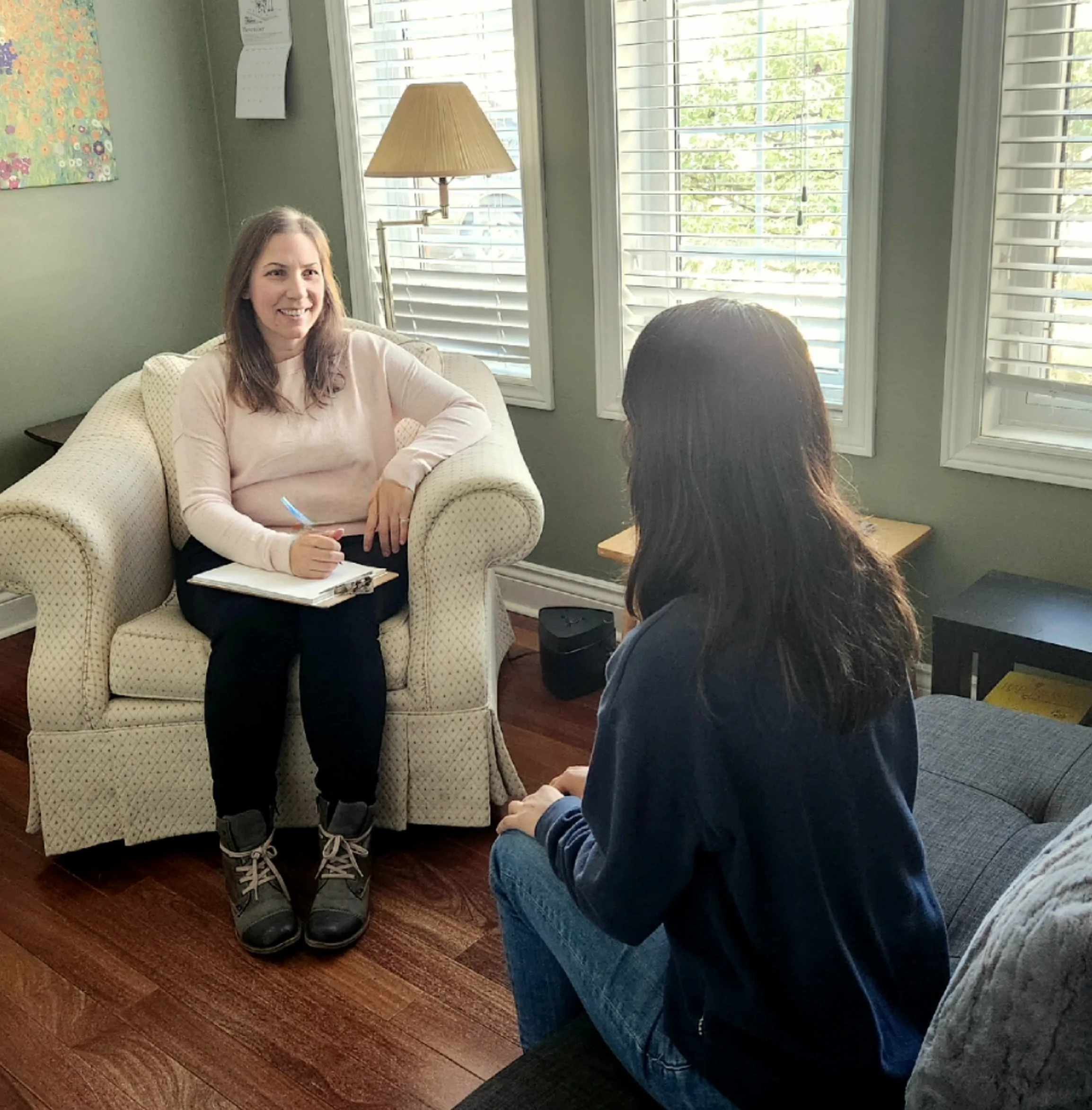
About the author; Ljuba Udovc RP, BA, CYC, is a Registered Psychotherapist with 25 years experience supporting clients in Ontario. She specializes in anxiety therapy, OCD therapy provides both in-person sessions in Burlington, Ontario, or virtual sessions for individuals who live throughout Ontario. Click the button to reach out now.